
The U.S. Virgin Islands look made for aerials: turquoise bays, green ridgelines and cays scattered out to the horizon. They're also a U.S. territory with busy airports, a national park and several agencies that care where your drone goes. Here is what we walk every client through before an aerial shoot on St. Thomas, St. John or St. Croix.
1. The FAA is in charge
The territory follows the same federal drone rules as the mainland. The Virgin Islands Port Authority states it plainly: drone use is allowed in the USVI with the approval of the Federal Aviation Administration. Commercial work is flown under FAA Part 107, which means a certificated remote pilot and a registered aircraft.
2. Near the airports, only the FAA can say yes
Both commercial airports, Cyril E. King on St. Thomas and Henry E. Rohlsen on St. Croix, sit inside controlled airspace. The Port Authority notes that its own staff and the airport control tower cannot issue drone approval. Part 107 pilots request airspace authorization from the FAA directly. Build that request into your schedule, because Charlotte Amalie, the harbor and much of the St. Thomas south shore are close to the airport.
3. Virgin Islands National Park is a no-drone zone
The National Park Service is clear: drones are not allowed in Virgin Islands National Park, which covers a large part of St. John and its surrounding waters. The ban comes from a 2014 order closing all national parks to unmanned aircraft, over land or water. If your story needs Trunk Bay or Cinnamon Bay from the air, talk to us early about alternatives, such as shooting from outside the park boundary or from a manned aircraft where permitted.
4. There's no single film permit, but locations need their own
According to the USVI Film Office, there is no blanket film permit required to enter the territory, and U.S. citizens don't need work permits. Individual locations are a different story: a production coordinator works with the Film Office to secure authorizations from agencies such as the National Park Service, Coastal Zone Management, U.S. Fish and Wildlife, police (for road closures), fire, marine enforcement and government buildings. Locally managed spots like Magens Bay have their own film location application.
5. Plan for the weather and the water
Trade winds, salt spray and fast-moving squalls are part of island aerials. We plan flights around wind forecasts, keep launch points out of the spray, and schedule golden-hour windows with backups. Boat-to-boat and over-water work needs extra planning for recovery and safety.
How we help
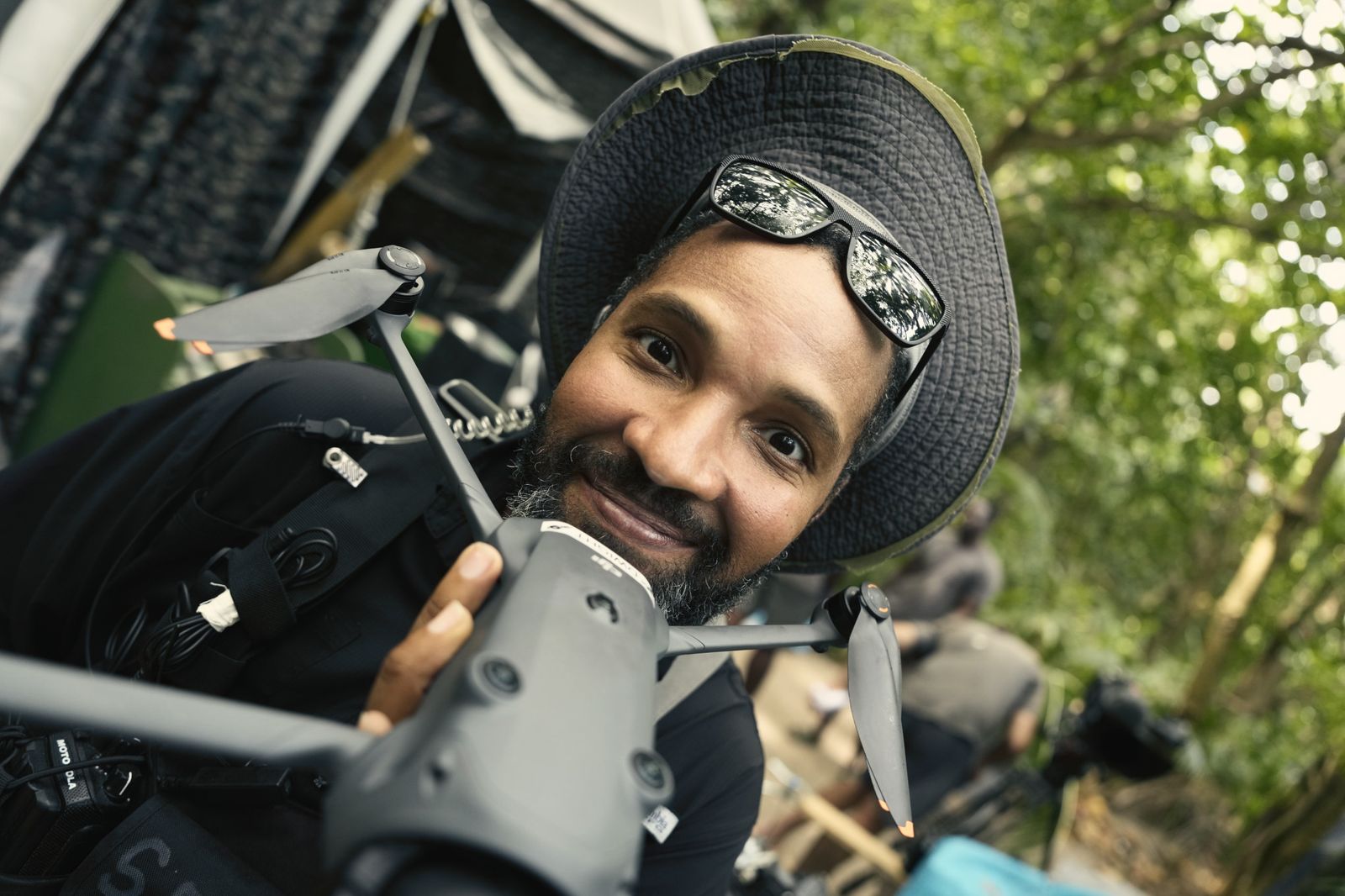
Dwight Winston is an FAA and EASA certified drone pilot and a 4× Emmy® nominee for Outstanding Cinematography for a Reality Program, including three nominations as an aerial camera operator on CBS Survivor. We handle flight planning, airspace requests and location coordination as part of every aerial job, so your team can focus on the story. See our aerial cinematography services or tell us about your project.
Sources: VI Port Authority: Operating drones in the USVI · National Park Service: Drones in Virgin Islands National Park · USVI Film Office: permits. Rules change; confirm current requirements before your shoot.